Showing posts with label 60's. Show all posts

Wednesday, 15 June 2016

(This article was originally published on Atom Retro's Mod Clothing Chronicles).

A life leading up to Bazaar:

Born in Blackheath, London to Welsh Parents, Mary Quant finished her studies at Blackheath High School and went on to study illustration at Goldsmith's College. Upon finishing her course, Quant took up a post as an apprentice couture milliner, whilst also taking a pattern cutting class in her spare time. It was her experiences during her apprenticeship that led Quant to realise that fashion shouldn't just be reserved for the upper classes, but should also be accessible to a younger, less privileged clientele.

Quant surmised that at the time fashion simply wasn't tailored to the youth market. Inspired by memories from childhood, images of Chelsea Beatniks and flamboyant dance outfits, Quant was to assume the mantle as a pioneer of youth fashion. Teaming up with her husband and business partner, Alexander Plunkett-Greene whom she had had met whilst studying at Goldsmith's College and Archie McNair to take on accountancy, legal and commercial aspects, Quant plotted a fashion revolution that would begin at 138A Kings Road, London.


Wednesday, 8 June 2016

John Stephen, The King of Carnaby Street (b. 28/08/1932 d. 01/02/2004)
(This article was originally published on Atom Retro's Mod Clothing Chronicles)

This is the in place to be!

A figurehead of British fashion, a lost icon rediscovered and perhaps previously overshadowed by his contemporaries. The name John Stephen, the legacy Carnaby Street.

John Stephen's success in the Menswear arena more than matched the impact of Quant and Hulanicki on Women's fast fashion in the Swinging Sixties. Whilst not always being recognised in such high esteem as some of his peers, John Stephen is gradually coming to prominence, now regarded as one of the Uk's most innovative and inspirational fashion entrepreneurs.

John Stephen's flagship store, His Clothes on Carnaby Street
Moving from his native Glasgow to London at the age of 18 in 1952, Stephen found work within the Military Department at Moss Bros in Covent Garden. Here he honed his talent as a tailor, studying and practicing in traditional tailoring. Soon, Stephen moved on to find work at avant-garde and pioneering menswear shop Vince Man shop situated in Newburgh Street, London. Here, John Stephen saw first hand the huge potential and indeed the longing of the gentleman customer for a neoteric Fashion Menswear Boutique. One that expressed freedom through fashion, a modern outlook and that was in tune with the youth of the today and their social scene. As John Stephen was already part of this scene he already had a key understanding of customers wants and desires. Using Vince as a stepping stone to further his fledgling fashion career, Stephen worked double shifts as a waiter and at Vince to save up enough money.


Wednesday, 1 June 2016

(This article was original published on Atom Retro's Mod Clothing Chronicles).

Our new Sixties Boutiques blog series will take a look into the roles of key players within the Sixties fashion industry, celebrating their inspiring stories and innovative ideas. Kicking off with the tale of Barbara Hulanicki's and Stephen Fitz-Simons famous BIBA store.

From Art College to freelance fashion illustrator to mail order innovator to boutique proprietor. A whirlwind exploration of Barbara Hulinicki's BIBA.

There's always been a certain propensity for the avid fashion connoisseur to acquire designs that their beloved icons so gracefully adorn. Biba's Postal Boutique was the first instance of Barbara Hulanicki pursuing avenues that explored the desirability of the 'As worn by' celebrity culture. The ability to affordably design and dress fashion fans in styles akin to icons such as Bardot was to prove a lucrative career choice. BIBA's Postal Boutique unleashed a suitably chic Retro gingham dress to the Sixties scenesters via an advert in the Daily Mail (May 1964). In less than one day the response was emphatic, with four thousand orders taken and the total eventually reaching a staggering seventeen thousand. Fast forward less than 4 months and BIBA's first store was all set to open. A haven for Mod Girls with boundless Retro wares, Mod Clothing and raving sounds!

Biba's original Pink Gingham Dress
Barbara Hulanicki was always keen on developing Mod silhouettes into a more three dimensional style. She pictured her happy clients looking just like the designs she had originally drawn...Extravagant, decadent and the place to be, The first BIBA store opened in Kensington in September, 1964. A walk in cat-walk with Retro, Art Deco influences and lavish scenes, BIBA set out to be style, substance and a hip hangout. A beacon of celebrity couture and Mod chic styles, BIBA's reputation rapidly grew. A rock and roll and celebrity haunt, the BIBA interior was a stage, complete with it's own wardrobe designer, a plethora of willing performers and artistes as well as a confident crowd of affluent, young clientele. Delightful Mod clothing in clever and innovative colour palettes set against a backdrop of Victorian furniture and Retro antiques caused a stir amongst the customer base of mainly women under the age of 25.

Clever marketing campaigns saw clothes draped on hat stands or period furniture and accessories neatly displayed in bowls. The frenzy for the latest BIBA designs was immense and the shop would be over-run by eager customers. BIBA witnessed unequivocal growth from an entirely unwitting viral marketing campaign that saw brand recognition surge through unbridled word of mouth, after all even the staff formed part of BIBA's loyal customer base. A certain air of sophistication and authority could be assumed by working in a place of such social stature. The instant understanding of what customers wanted, their desire to dress like icons and idols of stage, screen and music made BIBA a hot spot for young society girls, but moreover the affordable prices made their dreams come true and thankfully not at the expense of their bank balance.

For just 10% of the average weekly wage, BIBA could kit girls out like the stars. Even the stars themselves got in on the action, gratefully snapping up the latest new and trendy threads from the boutique BIBA. The relatively new concept of fast fashion it could be argued was born in the Sixties. What the Mod Girls, Cathy McGowan et al dressed in on Friday's Ready Steady Go would be on the shelves of BIBA boutique in the form of an affordable replica first thing Monday morning.


Sunday, 13 March 2016


Part two of our eight part series exploring The Beatle’s style from 1961 to 1970, by our guest blogger, Harrison. In this instalment we see the Beatles out of leather and into their first suits. You can also create your very own Beatles inspired look with this guide.
'62 - '63
Suited and Booted

01.jpg
The Beatles wearing their Beno Dorn Suits. Photo by Harry Whatmough, 1962


The Beatles first recorded performance with Ringo Starr on drums, 
wearing their suits without the blazers.


“I don’t think John particularly liked wearing a suit - nor did I - but we wanted more work, and we realised that’s what we had to do.” 
- George Harrison


In January of 1962, The Beatles signed a contract with Brian Epstein to manage them. Epstein was only a few years older than the lads and had no prior experience managing a band, although he had successfully run NEMS, his family’s record shop on Whitechapel, Liverpool. What he lacked in experience he made up for in his determination to ensure the groups music career flourished.

One of the first moves Epstein made was to encouraged the Beatles to clean up their image. He coaxed them into wearing jeans and jumpers with their leather jackets instead of their full leather suits. This was a compromise the lads were willing to make, however, when Epstein then suggested that they wear tailored suits on stage, he was met with resistance, especially from John Lennon and Pete Best. Both young men preferred to wear their leathers, thinking it was a more 'rock and roll' image, but they also acknowledged that if they wanted to advance their careers, they needed to change their appearance.

The Beatles moved into the next phase of their careers, transitioning from rough-around-the-edges rock 'n' rollers to polished pop stars. They performed in the leather suits for the final time at the Cavern Club in the Spring of 1962.

In 2012, George Harrison’s leather jacket went up for sale at Bonham’s. Harrison bought the jacket in 1960 for £10 ($14) and it fetched £110,450 ($177,400) at auction. His Chelsea 'Beatle' boots, which were also part of the memorabilia sale went for £61,250 ($98,000). A pair of leather trousers that allegedly belonged to Paul McCartney also surfaced in 2013.

Mike Hoggard often performed at the same venues as The Beatles in the early 60s and he claims to be in possession of McCartney’s leather trousers. He states that Brian Epstein gifted the clothing item to him after a gig at the Cavern Club. Hoggard’s claim hasn’t been substantiated and the trousers with the name ‘Paul’ written inside remain in his possession.

To further smartened up the band’s look, Epstein took the lads to a local tailor, Beno Dorn where they were fitted for their first mohair stage suits. The blazers were three-button, single breasted with slim lapels, broad shouldered and narrow at the waist. The matching suit trousers were similar to the drainpipe trousers the Beatles wore and at their insistence, were cut to fit snugly through the legs and were tapered quite narrow at the ankle. The lads returned the trousers twice to the tailors to have them narrowed further! Essentially, this was a slim lapelled, 3 button Mod Suit with a slight 1950s hangover in the short, more boxy fit of the jacket.

However, even away from the band, not everyone was pleased with the Beatles new look. For some of the fans it signalled the bands start to move away from Liverpool, and Cavern Club DJ, Bob Wooler remarked that the mohair suits were impractical. "They went on stage and really sweated and all their suits began to rot, they began to come apart at the seams... But that was the start of the new image. They learned how to adjust."

The dress shirts worn with the suits had rounded penny collars and were pin spread (bar collars) finished with inch wide skinny ties. The Portofino french cuffs of the dress shirt peeked out from their blazer sleeves and were accented with cuff-links.

4507-180dpi.jpg
The Beatles wearing their Douglas Millings collarless suits. Photo by Dezo Hoffman, 1963
The Beatles performing in 1963.


Arguably, the Beatles most iconic look from the early 1960s is their collarless suits. When the lads met London tailor, Douglas Millings in the Autumn of 1962 they requested “something different”. The design of this suit bares a striking resemblance to the collarless suits first designed by Pierre Cardin in 1960, however, the Beatles wearing the suits is what made the collarless jacket look quite popular in the early 1960s.

Pierre Cardin Suits, 1960
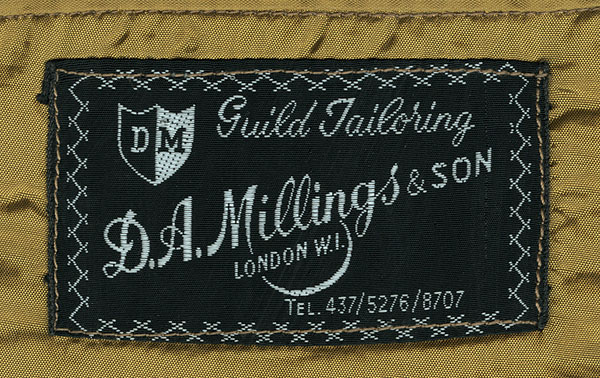
Millings became “the Beatles tailor” and the lads affectionately referred to him as “Dad”. He appeared alongside the group in the film, A Hard Day’s Night as a frustrated tailor trying to measure the Beatles. Douglas, along with his son Gordon were responsible for making hundreds of garments for the group over the years until the later half of the 60s.

The Beatles collarless suit edges were outlined in piping. The three-button suit jacket had slit pockets that were angled at the hips. The sleeves were shortened and buttonholes added to them. The back of the jackets had two small vertical vents that made it easier for the Beatles to perform in these suits. The look was quite mod and considered very fashion forward for a pop act.

John Lennon's Collarless Jacket
Another important component to the Beatles look was the famous mop top hair. Stuart Sutcliffe was the first Beatle to wear his hair stylishly combed forward. His girlfriend, Astrid Kirchherr had cut his hair into this unisex style. It was a popular look with many of the young men at the college she attended.

The Beatles poked fun at Sutcliffe’s newly styled hair and continued to wear theirs in 50s style greasy quiffs. A little later, George asked Astrid to cut his hair like Stuart’s, but after debuting his new look at a Hamburg club and being met with funny looks, Harrison quickly changed his hair back to the Teddy Boy look.

It wasn’t until the Autumn of 1961 when John and Paul ran into Jurgen Vollmer in Paris. He was an old friend from Hamburg and the “Exis” with the mod hair cut. They asked for what became known as the “Beatle cut”. 

The label inside John's Jacket
Returning from Paris with their new hairstyles, Epstein took them to a barber to have their mop-tops properly cut and styled. The sideboards were shortened and the fringe combed over the forehead, and they were clean shaven, perfecting what became perhaps the Beatles most iconic and well known image.


Wednesday, 7 October 2015

Marmalade are well known for their fabulous 1960's inspired dresses. Their Autumn Winter 15' collection is no different! Full of bright colours which is the perfect way to inject a pop of colour into your Winter wardrobe to liven up an outfit on a dreary day.

First established in 2001, Marmalade first started out as a boutique shop specialising in Vintage clothing. That same year Marmalade launched their own line of 1960's Mod inspired clothing. They have been thriving ever since, creating new stunning items every season.

Every piece of Marmalade's clothing is 1960's Mod inspired. They always contain bright colours, bold designs and distinctive Retro vibes. Conveying Vintage Sixties patterns in a thoroughly modern way, Marmalade dresses invoke a longing for Retro nostalgia in some and a daring and new look for others. The dresses cover both day time and evening wear and there is definitely the perfect Marmalade dress out there for anyone!

Check out the AW15 Marmalade Collection:


Marmalade striped 60s Winter coat. A bold and beautiful coat which is the perfect way to inject colour into your Autumn/Winter wardrobe!

Matching coat available.

Pre Order now: Stock expected 19th October.


Marmalade 60s centre striped dress. Contrasting graph print and block colour mini skirt it has all the qualities of the perfect 1960's Mod dress.

Pre Order now: Stock expected 19th October.


Marmalade 60s dogtooth Winter coat. Crafted with heavy weight virgin wool, it is the ideal coat to keep you warm this Autumn/Winter! Gorgeous dogtooth design throughout in red and cream.

Matching coat available.

Pre Order now: Stock expected 19th October.


Marmalade 60s colour band dress. Featuring Space Age style contrast colour bands in a luxurious stretch wool jersey. The perfect item for your Mod dress collection!

Pre Order now: Stock expected 19th October.


Shop all Marmalade >>