Showing posts with label 60s. Show all posts

Monday, 3 October 2016


Marmalade Dresses new collection for Winter 2016 is due to arrive in a few weeks, so we thought you might enjoy a little preview of what's in store.

As always, Marmalade create premium quality dresses and coats in 60s Mod inspired designs. Op-Art, pop art, mod and 60s geometric design is the order of the day for this seasons collection, plus a couple of retro print fabric highlights.

Check below for pics to drool over or shop for Marmalade here.

Monday, 8 August 2016

Lulu Dress


Mademoiselle Yéyé's collection for Autumn and Winter 2016 has just arrived at Atom Retro (with a little more to come later) and it doesn't disappoint!

As fans of Mademoiselle Yéyé have come to expect, this seasons collection comprises unique, high quality dresses, tops, knits and more, all with 60s Mod style and vintage va-va-voom!

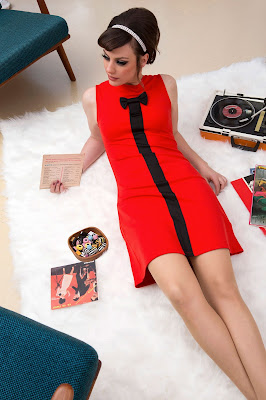
The Lulu Dress (pictured left) is a new style to the collection this season. This supremely sixties inspired mod mini dress comes in red with fixed black bow detail to centre front. In a super stretchy, comfy to wear fabric, this is a must-have dress.

Check below for more of what's in store from Mademoiselle Yeye, or shop now!


Tuesday, 21 June 2016


"...They brought light, minimalist design that easily turned any outfit into a designer brand."
- The Caravan, Ray-Ban Icons

Ray-Ban Caravan Sunglasses arrived on the scene in 1957, twenty years after Ray-Ban designed and patented the world's first Aviator Sunglasses. A new take on the Aviator, the Caravan featured a square lens to replace the iconic large teardrop shaped lens of the classic Aviator, a brow bar and a streamlined, geometric design. 

The Aviator had originally been designed with pilots in mind (giving rise to the name) who required a pair of large lens sunglasses to block out glare from the sun while flying. The style to launch Ray-Ban, (the name itself literally derived from the "banning of the sun's rays") the Aviator with it's oversized, protective lens and lightweight metal frame had gained popularity in mainstream fashion following the second world war. US army General Douglas McArthur had been photographed wearing Ray-Ban Aviator Sunglasses as he strode ashore in the Philippines in 1944 and the military inspired look had taken off. 

Robert DeNiro wearing Ray-Ban Caravan Sunglasses in
Taxi Driver, 1976
By the end of the fifties, Ray-Ban were ready to develop a new Aviator design. There was a demand for a smaller version of the classic Aviator, and the fashion was moving towards geometric influences. Also, as the Wayfarer had proven popular in the 1950s, Ray-Ban was also looking for a way to rejuvenate the Aviator design, and so the Caravan was born. 

Available in all the classic Ray-Ban colour ways - the G-15 or B-15 lens with the gold, silver or gunmetal frame, the Caravan's sharp, minimalist design also offered the gradient and mirror lens. The smaller lens still offered a good amount of protection for the wearer from glare and a certain amount of anonymity desired by politicians and celebrities. 

Barry Gibb in Caravan Sunglasses
During the Aviator revival of the 1970s, the Caravan style also gained ground as an alternative Aviator option. It was prominently featured in Martin Scorsese's 1976 film, Taxi Driver, being worn by Robert DeNiro as he played Travis Bickle.  

The Aviator style was adopted as the sunglasses of choice for the disco scene in the seventies as well, so too the Caravan provided an alternative look. Here is Barry Gibb wearing a pair of Caravan sunglasses in the seventies. 

Skier Jean-Claude Killy looking cool in Caravans in the 70s


Following the demise of disco in the 1980s, the Aviator's popularity waned, and this had a knock on effect for it's younger Caravan brother. To combat this, Ray-Ban secured a very lucrative deal in 1982 for product placement in movies and TV shows for the following five years. With Tom Cruise and other movie stars wearing Aviator style sunglasses in many high profile films, the Aviator was soon back in fashion. 

Jon Hamm as Don Draper in Mad Men.


In recent years, the Ray-Ban Caravan has proven a popular style among mods who are attracted by the Caravan's streamlined, classic and clean shape and style. The Caravan was also chosen as the style for Jon Hamm to wear as Don Draper in Mad Men, invoking a late fifties and early sixties classic American Retro look. 


Thursday, 16 June 2016

Part two of our Mod hairstyles guide explores the 1960s - the birth of the Mod look. Along with Mod clothing, Mod hairstyles are part of intrinsically part of mod style and image. How you chose to wear your hair contributes to your over all identity, and none more so than within a culture like Mod or any of it's subcultures Mod Revivalists, Scooterboys, Skins and more. The Sixties saw a lot of social and political change and this was reflected in fashion and style. The new generation wanted to break away and create its own identity. Mod was born!


Steve Marriott with his classic layered look
1960s: The Steve Marriott Layered Cut

Similar to: The Mop Top

Maybe the first proper mod hairstyle, the Steve Marriott take on the classic mens layered cut landed somewhere in between a long haired lover from Liverpool Mop Top and the shorter, neat Ivy League look of the past. The hair is cut in layers, resulting in a choppy, different length look which is typically longer at the front, sides and fringe and cut shorter at the back. At the side, the hair might be cut around the ear, or worn slightly over it. There is a soft centre parting which reaches the front where the fringe is worn swept to the sides.

Although not as famous as other 1960s hair cuts, this mod hairstyle is as iconic and popular among mods today as it ever was.


The Beatles with their classic Mop Top look

1960s: The Mop Top

Similar to: The Pageboy

The Mop Top, or Beatle Cut, (or 'Arthur', according to George Harrison!) is probably the most famous haircut of the 1960s. Named because of it's resemblance to a literal mop, the haircut originated from the Beatles Hamburg days. Astrid Kirchherr, a photographer and the girlfriend of original Beatles bassist, Stuart Sutcliffe is credited with the style which was worn first by her, her friends and Stuart. Later all the other Beatles (except for a reluctant Pete Best!) adopted the look giving the band it's first cohesive and truly unique look. The hair is cut long, down to the collar and covering the ears with a long fringe at the front and no parting. Although ridiculed by adults at the time, the mop tops was vastly popular in the sixties. In the Britpop nineties there was a revival to this intrinsically sixties mod hairstyle.

Steve Marriott with a shorter, jagged cut 


1960s: The Other Steve Marriott Cut

Similar to: The French Crop

Like a sixties update to a classic French Crop haircut, this is the shortest style in our sixties mod selection. Still cut with choppy layers and in different lengths, this is a much shorter, low maintenance version of the Steve Marriott layered cut. It can be cut around the ears, or overlapping them as the wearer desired and features a blunt, choppy, short fringe at the front with a little bit of feathering.

Neat, sharp and with lots of attitude, this is a mod haircut which harks back the short back and sides of yesteryear, with a modern update. 


The Yardbirds Keith Relf with a long Pageboy cut
1960s: The Pageboy 

Similar to: The Mop Top, The Bowl Cut

A unisex haircut which suits both men and women mods. The cut first became popular in the 1920s with young boys after it was worn by child star, Jackie Coogan (who grew up to be Uncle Fester in the original Addams Family TV series!) It was named after what was perceived to be a 'pudding basin' haircut wore by medieval pageboys. The cut is worn straight and long, past the ears, where it then curls inwards and usually with a long fringe at the front.

Popular in both the fifties and sixties, it's perhaps the 1960s when it was the most prominent as an alternative to the mop top and a style which still fit with the non-conformist, long haired looks of the decade.


Further Reading: 

Wednesday, 15 June 2016

(This article was originally published on Atom Retro's Mod Clothing Chronicles).

A life leading up to Bazaar:

Born in Blackheath, London to Welsh Parents, Mary Quant finished her studies at Blackheath High School and went on to study illustration at Goldsmith's College. Upon finishing her course, Quant took up a post as an apprentice couture milliner, whilst also taking a pattern cutting class in her spare time. It was her experiences during her apprenticeship that led Quant to realise that fashion shouldn't just be reserved for the upper classes, but should also be accessible to a younger, less privileged clientele.

Quant surmised that at the time fashion simply wasn't tailored to the youth market. Inspired by memories from childhood, images of Chelsea Beatniks and flamboyant dance outfits, Quant was to assume the mantle as a pioneer of youth fashion. Teaming up with her husband and business partner, Alexander Plunkett-Greene whom she had had met whilst studying at Goldsmith's College and Archie McNair to take on accountancy, legal and commercial aspects, Quant plotted a fashion revolution that would begin at 138A Kings Road, London.


Wednesday, 8 June 2016

John Stephen, The King of Carnaby Street (b. 28/08/1932 d. 01/02/2004)
(This article was originally published on Atom Retro's Mod Clothing Chronicles)

This is the in place to be!

A figurehead of British fashion, a lost icon rediscovered and perhaps previously overshadowed by his contemporaries. The name John Stephen, the legacy Carnaby Street.

John Stephen's success in the Menswear arena more than matched the impact of Quant and Hulanicki on Women's fast fashion in the Swinging Sixties. Whilst not always being recognised in such high esteem as some of his peers, John Stephen is gradually coming to prominence, now regarded as one of the Uk's most innovative and inspirational fashion entrepreneurs.

John Stephen's flagship store, His Clothes on Carnaby Street
Moving from his native Glasgow to London at the age of 18 in 1952, Stephen found work within the Military Department at Moss Bros in Covent Garden. Here he honed his talent as a tailor, studying and practicing in traditional tailoring. Soon, Stephen moved on to find work at avant-garde and pioneering menswear shop Vince Man shop situated in Newburgh Street, London. Here, John Stephen saw first hand the huge potential and indeed the longing of the gentleman customer for a neoteric Fashion Menswear Boutique. One that expressed freedom through fashion, a modern outlook and that was in tune with the youth of the today and their social scene. As John Stephen was already part of this scene he already had a key understanding of customers wants and desires. Using Vince as a stepping stone to further his fledgling fashion career, Stephen worked double shifts as a waiter and at Vince to save up enough money.


Thursday, 21 April 2016


The Overtures in their Madcap England threads


The UK's premier Sixties tribute band, The Overtures are busy touring Holland with their excellent Bootleg Sixties show currently, but you can now enjoy your Overtures show whenever you want with the new, long awaited, Bootleg Sixties show DVD,  Live From The Playhouse!


Featuring highlights from the show and 38 songs from The Overtures extensive repertoire, including songs from The Beatles, The Who, The Kinks, The Rolling Stones and many more and DVD behind the scenes and interviews extras.


The DVD is £15.00 plus P&P and can be purchased from the Bootleg Sixties website here.

Wednesday, 20 April 2016


"Built as strong and sturdy as the personalities that wore them..." 
- The Wayfarer, Ray-Ban Icons


"It's 106 miles to Chicago, we got a full tank of gas, half a pack of cigarettes, it's dark... and we're wearing sunglasses."
- The Blues Brothers, 1980

The Ray-Ban Wayfarer, possibly the most famous, iconic and instantly recognisable sunglasses style in history, and it's easy to see why. The typically black, solid frame and green G-15 lens affords the wearer the desired amount of anonymity, privacy and... well, it just instantly adds cool to any look or outfit, doesn't it?! 

The original patent , filed in 1952
Ray-Ban began selling the Wayfarer in 1956, the first of it's kind and a revolution in eyewear. It had been designed and patented in 1952 by American optical designer, Raymond Stegeman who procured lots of patents for Bausch & Lomb, Ray-Ban's parent company at the time.

The design was new and different from anything that had gone before in two respects - it was to utilise new plastic molding technology, marking a transition from wire and metal frame eyewear into plastic frame eyewear - something not available previously, and also it's intrinsic 1950s style, which reflected Atomic and Space age design and according to design critic Stephen Bayley, "Eames chairs and Cadillac tail fins."

James Dean wearing Wayfarer Sunglasses

The Wayfarer was instantly popular. James Dean wore Wayfarers in Rebel Without A Cause and the sunglasses became forever associated with rock and roll with everyone from Roy Orbison to John Lennon to Bob Dylan donning a pair throughout the fifties and sixties.


Sunday, 3 April 2016

Part four exploring The Beatles style from 1961 to 1970, compiled and written by guest blogger, Harrison. In this installment the Beatles move into military style and also into more casual attire. You can also create your very own Beatles inspired look with this guide.

'64 - '65
The In-betweeners 


The Beatles performing at Shea Stadium, New York.


"It's all sort of important in good ways and it's unimportant really in other ways."
- Ringo Starr


In 1964 through 1965, The Beatles were riding high on a wave of commercial and critical success. The lads performed at Shea Stadium in New York City on August 15th, 1965. In attendance were over 55,000 concertgoers, which made this the Beatles largest concert up to that date. 

A replica of the Beatles "Shea" jacket,
signed by Paul McCartney.
The Beatles continued to wear matching stage suits when they performed. The Shea Stadium suits are arguably their most iconic look from the mid 1960s. The military style single breasted tan coloured jacket with five brown buttons down the front, one smaller button on each chest pocket and also one button on each shoulder. The 'Wells Fargo' sheriff badge is optional. Underneath the jackets, instead of wearing dress shirts, they wore black t-shirts, which matched their black drainpipe trousers and "Beatle boots".  

However, their personal style had evolved and they became more easily identified through their interviews, photoshoots and personal appearances as individuals instead of one entity. Perhaps the best example of their individual style is contained in the second movie they starred in, which was also the first one in colour, Help! A comedy adventure that revolves around Ringo Starr's ring and the mysterious cult that will do anything to obtain it!


Sunday, 13 March 2016


Part two of our eight part series exploring The Beatle’s style from 1961 to 1970, by our guest blogger, Harrison. In this instalment we see the Beatles out of leather and into their first suits. You can also create your very own Beatles inspired look with this guide.
'62 - '63
Suited and Booted

01.jpg
The Beatles wearing their Beno Dorn Suits. Photo by Harry Whatmough, 1962


The Beatles first recorded performance with Ringo Starr on drums, 
wearing their suits without the blazers.


“I don’t think John particularly liked wearing a suit - nor did I - but we wanted more work, and we realised that’s what we had to do.” 
- George Harrison


In January of 1962, The Beatles signed a contract with Brian Epstein to manage them. Epstein was only a few years older than the lads and had no prior experience managing a band, although he had successfully run NEMS, his family’s record shop on Whitechapel, Liverpool. What he lacked in experience he made up for in his determination to ensure the groups music career flourished.

One of the first moves Epstein made was to encouraged the Beatles to clean up their image. He coaxed them into wearing jeans and jumpers with their leather jackets instead of their full leather suits. This was a compromise the lads were willing to make, however, when Epstein then suggested that they wear tailored suits on stage, he was met with resistance, especially from John Lennon and Pete Best. Both young men preferred to wear their leathers, thinking it was a more 'rock and roll' image, but they also acknowledged that if they wanted to advance their careers, they needed to change their appearance.

The Beatles moved into the next phase of their careers, transitioning from rough-around-the-edges rock 'n' rollers to polished pop stars. They performed in the leather suits for the final time at the Cavern Club in the Spring of 1962.

In 2012, George Harrison’s leather jacket went up for sale at Bonham’s. Harrison bought the jacket in 1960 for £10 ($14) and it fetched £110,450 ($177,400) at auction. His Chelsea 'Beatle' boots, which were also part of the memorabilia sale went for £61,250 ($98,000). A pair of leather trousers that allegedly belonged to Paul McCartney also surfaced in 2013.

Mike Hoggard often performed at the same venues as The Beatles in the early 60s and he claims to be in possession of McCartney’s leather trousers. He states that Brian Epstein gifted the clothing item to him after a gig at the Cavern Club. Hoggard’s claim hasn’t been substantiated and the trousers with the name ‘Paul’ written inside remain in his possession.

To further smartened up the band’s look, Epstein took the lads to a local tailor, Beno Dorn where they were fitted for their first mohair stage suits. The blazers were three-button, single breasted with slim lapels, broad shouldered and narrow at the waist. The matching suit trousers were similar to the drainpipe trousers the Beatles wore and at their insistence, were cut to fit snugly through the legs and were tapered quite narrow at the ankle. The lads returned the trousers twice to the tailors to have them narrowed further! Essentially, this was a slim lapelled, 3 button Mod Suit with a slight 1950s hangover in the short, more boxy fit of the jacket.

However, even away from the band, not everyone was pleased with the Beatles new look. For some of the fans it signalled the bands start to move away from Liverpool, and Cavern Club DJ, Bob Wooler remarked that the mohair suits were impractical. "They went on stage and really sweated and all their suits began to rot, they began to come apart at the seams... But that was the start of the new image. They learned how to adjust."

The dress shirts worn with the suits had rounded penny collars and were pin spread (bar collars) finished with inch wide skinny ties. The Portofino french cuffs of the dress shirt peeked out from their blazer sleeves and were accented with cuff-links.

4507-180dpi.jpg
The Beatles wearing their Douglas Millings collarless suits. Photo by Dezo Hoffman, 1963
The Beatles performing in 1963.


Arguably, the Beatles most iconic look from the early 1960s is their collarless suits. When the lads met London tailor, Douglas Millings in the Autumn of 1962 they requested “something different”. The design of this suit bares a striking resemblance to the collarless suits first designed by Pierre Cardin in 1960, however, the Beatles wearing the suits is what made the collarless jacket look quite popular in the early 1960s.

Pierre Cardin Suits, 1960
Millings became “the Beatles tailor” and the lads affectionately referred to him as “Dad”. He appeared alongside the group in the film, A Hard Day’s Night as a frustrated tailor trying to measure the Beatles. Douglas, along with his son Gordon were responsible for making hundreds of garments for the group over the years until the later half of the 60s.

The Beatles collarless suit edges were outlined in piping. The three-button suit jacket had slit pockets that were angled at the hips. The sleeves were shortened and buttonholes added to them. The back of the jackets had two small vertical vents that made it easier for the Beatles to perform in these suits. The look was quite mod and considered very fashion forward for a pop act.

John Lennon's Collarless Jacket
Another important component to the Beatles look was the famous mop top hair. Stuart Sutcliffe was the first Beatle to wear his hair stylishly combed forward. His girlfriend, Astrid Kirchherr had cut his hair into this unisex style. It was a popular look with many of the young men at the college she attended.

The Beatles poked fun at Sutcliffe’s newly styled hair and continued to wear theirs in 50s style greasy quiffs. A little later, George asked Astrid to cut his hair like Stuart’s, but after debuting his new look at a Hamburg club and being met with funny looks, Harrison quickly changed his hair back to the Teddy Boy look.

It wasn’t until the Autumn of 1961 when John and Paul ran into Jurgen Vollmer in Paris. He was an old friend from Hamburg and the “Exis” with the mod hair cut. They asked for what became known as the “Beatle cut”. 

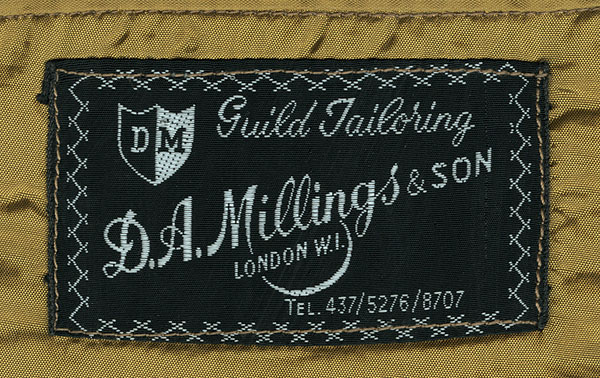
The label inside John's Jacket
Returning from Paris with their new hairstyles, Epstein took them to a barber to have their mop-tops properly cut and styled. The sideboards were shortened and the fringe combed over the forehead, and they were clean shaven, perfecting what became perhaps the Beatles most iconic and well known image.


Thursday, 10 March 2016


If you're in the Netherlands this March and April, make sure you catch the UK's premier 60s Tribute band, The Overtures on tour!

The Overtures are kicking off 2016 with a 5 week tour of Holland at the end of March and throughout April, and we dare say they might be sporting some of their Madcap England clobber on stage too! The band were recently photographed wearing Madcap England shirts, jackets, suits and shoes for their new promo pics!

Check here for the full list of tour dates


Wednesday, 9 March 2016


The first delivery of the new Marmalade collection for Spring 2016 is due to arrive very soon at Atom Retro!

One of Atom Retro's best selling and longest stocked women's brands, Marmalade is a collection of premium women's 60s and Mod Dresses and jackets. Gorgeous 60s Mini Dresses taking influences and inspiration from some of the most iconic designers of the 1960s.

Here's a sneak preview of what's in store from Marmalade for this season. As always, the dresses can be quite limited stock, so don't let your favourite sell out before you've had chance to grab one!

STOP PRESS! The collection is now in stock! (More styles coming soon!) Shop here.

Check under the 'read more' for Marmalade's beautiful new dresses and jackets.


Sunday, 6 March 2016

Our new blog series by guest blogger, Harrison! This eight part series will explore The Beatles iconic looks from 1961 to 1970. You can also create your very own Beatles inspired look with this guide.

61’ - 62’
The Four Gene Vincents

611217_17.jpg
The Beatles in 1961. Photo by Albert Marrion
The earliest known footage of the Beatles performing in 1961. 
In this soundless 8MM clip, they are wearing their leather suits.

“...We went back to Germany and we had a bit more money the second time, so we bought leather pants and looked like four Gene Vincents, only a bit younger."

- John Lennon, ‘The Mersey Sound’

The Beatles emulated the style of Teddy Boys, a subculture of rebellious young men that had sprung up in the 1950s. They were product of American rock n’ roll music, and their style was a take on the dandies during the Edwardian period.

Teds wore knee length drape jackets, high necked collared shirts, skinny ties, drainpipe trousers and brogues or crepe soled creepers. They styled their hair with pomade and piled it high into a quiff.  

By the early 1960s the look had evolved. Young men were now wearing leather jackets - perhaps a call back to Marlon Brando in ‘The Wild One’ - and long pointed toe Winklepicker Shoes were in fashion. A pair of snugly fit drainpipe trousers were still popular.  

In the spring of 1961 The Beatles returned to Hamburg for a second time. They were contracted for a four month residency at the Top Ten Club and were reunited with their old friend, Astrid Kirchherr, a photographer they’d met during their first trip to Germany. The young woman was also the girlfriend of Stuart Sutcliffe, the group’s bass player at the time.

When he wasn’t performing with the band, Stuart would spend his time with Astrid. He was greatly influenced by her unusual sense of style. She was part of the existentialist movement, shortened to 'Exis' by John Lennon. They dressed in all-black, unisex clothing and wore unisex hairstyles. Stuart would borrow her clothes and mirror her look. In particular, he was taken with her tight black leather suit, and Astrid had one tailor-made for Stuart to wear when he performed with the group.  

His bandmates were knocked out by the leather suit wanted their own to match, but they couldn’t afford the expensive prices the leather shop downtown charged. They went to a affordable tailor in the St. Pauli district of Hamburg and ordered black leather drainpipe pants and matching velvet shirts. They accessorised their hard edged look with cowboy boots and occasionally wore pink caps that sat on the back of their quiffs.  

The Beatles return to Liverpool caused a stir of excitement. Their new look and sound set them apart from other groups and gave them the edge on the Merseyside music scene. Pretty soon others on the Merseybeat scene were also emulating the Beatles 'Hamburg' style.