Showing posts with label sixties. Show all posts

Monday, 16 January 2017

The most famous club in the world, Liverpool's Cavern Club opened it's doors for the first time 60 years ago today.

The original club (now sadly demolished) opened in a basement of a fruit sellers warehouse on Mathew Street, a backstreet in Liverpool on the 16th January 1957. The club was originally a jazz club, inspired by the cellar nightclubs of Paris.

Later that same year, a local Skiffle and Rock and Roll band, The Quarrymen, were booked to play the club. On the 7th August, 1957 The Quarrymen - John Lennon's original band - played the Cavern for the first time. The band argued about their set list prior to the performance. Skiffle was tolerated at the jazz club, but Rock and Roll was a no-no. After the first song, Lennon called to his bandmates to start the Elvis Presley song, Don't Be Cruel. Banjo player, Rod Davis warned Lennon not to play it, but he started the song, forcing the others to join in. Halfway through the song a note was passed to the stage; 'Cut out the bloody rock and roll!'

Paul McCartney's Cavern Club debut was on the 24th January 1958, and George Harrison a bit later - on the 9th February 1961. Ringo Starr first played the Cavern as drummer for Rory Storm and The Hurricanes. When the club was sold in 1959 to Ray McFall, it was reopened as a beat and rock and roll club. The first beat night was 25th May, 1960, with Rory Storm and The Hurricanes on the bill.

The Beatles played the Cavern Club a total of 292 time - so the legend goes, and the club's name has become synonymous with Beatles and the start of Beatlemania. It was also at the Cavern Club that Brian Epstein first saw the band and decided he would become their manager.

Following the break up of the Beatles, nostalgia for the club waned and it was sadly closed in 1973 and the original club was filled in to make way for a new Mersey Rail line (which never happened).

But the story wasn't over for the Cavern. Liverpool FC player Tommy Smith took over the club in 1984 and it was rebuilt, using many of the original bricks. The club survived in its new guise until 1989 when financial reasons forced it to close again. It was taken over by present owners Bill Heckle and Dave Jones in 1991 and reopened.

In 1999 Paul McCartney returned to the Cavern to play his last gig of the 20th century in the place where it all began (well, nearly, just to the right of it a bit).

Today, to mark the anniversary a new statue of Cilla Black - who worked as a cloakroom girl at the club in the sixties before going on to be the only female singer managed by Beatles manager, Brian Epstein - was unveiled on Mathew Street, situated where the original Cavern Club entrance was. Artist, Tony Booth, who created many posters for the original Cavern Club and for Brian Epstein's artists, created the pictured poster to celebrate 60 years of the Cavern. Sadly, Tony Booth passed away last week, just days before the anniversary. His son Lee remarked how he began and ended his career with posters for the Cavern Club.

16th January 1957 - 16th January 2017. Here's to the next 60 years of The Most Famous Club In The World.

Thursday, 12 January 2017


Madcap England's latest design the retro Jackie and Robin PVC raincoats have arrived. These unique garments are inspired by the iconic Mary Quant Rainsmock design of the 1960's.


In 1963 the British designer Mary Quant wowed the fashion world when she previewed her Wet Collection in Paris. The collection of experimental designs using PVC, that had been two years in production, made history. Part of the collection was the original PVC Rainsmock which featured her new Christopher Robin collar design.


The appearance of the exciting new style could not have occurred at a better time. The use of bold block colours meant the garment fitted perfectly with the already established Pop-Art movement. Celebrities such as Cynthia Lennon, Jean Shrimpton and Twiggy were pictured wearing the Rainsmock cementing it's style into the public's consciousness, while Jackie Bowyer wore the item in her most famous photoshoot of the decade. The Rainsmock quickly became a much loved and iconic part of the Swinging Sixties.


Madcap England are giving you the opportunity to have your own piece of this incredible fashion and cultural heritage with the Jackie and Robin raincoats. The PVC garments stay true to the original by using bold block colours, a Christopher Robins collar and colour contrast button design.

Find the collection here.

Monday, 3 October 2016


Marmalade Dresses new collection for Winter 2016 is due to arrive in a few weeks, so we thought you might enjoy a little preview of what's in store.

As always, Marmalade create premium quality dresses and coats in 60s Mod inspired designs. Op-Art, pop art, mod and 60s geometric design is the order of the day for this seasons collection, plus a couple of retro print fabric highlights.

Check below for pics to drool over or shop for Marmalade here.


Thursday, 16 June 2016

Part two of our Mod hairstyles guide explores the 1960s - the birth of the Mod look. Along with Mod clothing, Mod hairstyles are part of intrinsically part of mod style and image. How you chose to wear your hair contributes to your over all identity, and none more so than within a culture like Mod or any of it's subcultures Mod Revivalists, Scooterboys, Skins and more. The Sixties saw a lot of social and political change and this was reflected in fashion and style. The new generation wanted to break away and create its own identity. Mod was born!


Steve Marriott with his classic layered look
1960s: The Steve Marriott Layered Cut

Similar to: The Mop Top

Maybe the first proper mod hairstyle, the Steve Marriott take on the classic mens layered cut landed somewhere in between a long haired lover from Liverpool Mop Top and the shorter, neat Ivy League look of the past. The hair is cut in layers, resulting in a choppy, different length look which is typically longer at the front, sides and fringe and cut shorter at the back. At the side, the hair might be cut around the ear, or worn slightly over it. There is a soft centre parting which reaches the front where the fringe is worn swept to the sides.

Although not as famous as other 1960s hair cuts, this mod hairstyle is as iconic and popular among mods today as it ever was.


The Beatles with their classic Mop Top look

1960s: The Mop Top

Similar to: The Pageboy

The Mop Top, or Beatle Cut, (or 'Arthur', according to George Harrison!) is probably the most famous haircut of the 1960s. Named because of it's resemblance to a literal mop, the haircut originated from the Beatles Hamburg days. Astrid Kirchherr, a photographer and the girlfriend of original Beatles bassist, Stuart Sutcliffe is credited with the style which was worn first by her, her friends and Stuart. Later all the other Beatles (except for a reluctant Pete Best!) adopted the look giving the band it's first cohesive and truly unique look. The hair is cut long, down to the collar and covering the ears with a long fringe at the front and no parting. Although ridiculed by adults at the time, the mop tops was vastly popular in the sixties. In the Britpop nineties there was a revival to this intrinsically sixties mod hairstyle.

Steve Marriott with a shorter, jagged cut 


1960s: The Other Steve Marriott Cut

Similar to: The French Crop

Like a sixties update to a classic French Crop haircut, this is the shortest style in our sixties mod selection. Still cut with choppy layers and in different lengths, this is a much shorter, low maintenance version of the Steve Marriott layered cut. It can be cut around the ears, or overlapping them as the wearer desired and features a blunt, choppy, short fringe at the front with a little bit of feathering.

Neat, sharp and with lots of attitude, this is a mod haircut which harks back the short back and sides of yesteryear, with a modern update. 


The Yardbirds Keith Relf with a long Pageboy cut
1960s: The Pageboy 

Similar to: The Mop Top, The Bowl Cut

A unisex haircut which suits both men and women mods. The cut first became popular in the 1920s with young boys after it was worn by child star, Jackie Coogan (who grew up to be Uncle Fester in the original Addams Family TV series!) It was named after what was perceived to be a 'pudding basin' haircut wore by medieval pageboys. The cut is worn straight and long, past the ears, where it then curls inwards and usually with a long fringe at the front.

Popular in both the fifties and sixties, it's perhaps the 1960s when it was the most prominent as an alternative to the mop top and a style which still fit with the non-conformist, long haired looks of the decade.


Further Reading: 

Wednesday, 15 June 2016

(This article was originally published on Atom Retro's Mod Clothing Chronicles).

A life leading up to Bazaar:

Born in Blackheath, London to Welsh Parents, Mary Quant finished her studies at Blackheath High School and went on to study illustration at Goldsmith's College. Upon finishing her course, Quant took up a post as an apprentice couture milliner, whilst also taking a pattern cutting class in her spare time. It was her experiences during her apprenticeship that led Quant to realise that fashion shouldn't just be reserved for the upper classes, but should also be accessible to a younger, less privileged clientele.

Quant surmised that at the time fashion simply wasn't tailored to the youth market. Inspired by memories from childhood, images of Chelsea Beatniks and flamboyant dance outfits, Quant was to assume the mantle as a pioneer of youth fashion. Teaming up with her husband and business partner, Alexander Plunkett-Greene whom she had had met whilst studying at Goldsmith's College and Archie McNair to take on accountancy, legal and commercial aspects, Quant plotted a fashion revolution that would begin at 138A Kings Road, London.


Wednesday, 8 June 2016

John Stephen, The King of Carnaby Street (b. 28/08/1932 d. 01/02/2004)
(This article was originally published on Atom Retro's Mod Clothing Chronicles)

This is the in place to be!

A figurehead of British fashion, a lost icon rediscovered and perhaps previously overshadowed by his contemporaries. The name John Stephen, the legacy Carnaby Street.

John Stephen's success in the Menswear arena more than matched the impact of Quant and Hulanicki on Women's fast fashion in the Swinging Sixties. Whilst not always being recognised in such high esteem as some of his peers, John Stephen is gradually coming to prominence, now regarded as one of the Uk's most innovative and inspirational fashion entrepreneurs.

John Stephen's flagship store, His Clothes on Carnaby Street
Moving from his native Glasgow to London at the age of 18 in 1952, Stephen found work within the Military Department at Moss Bros in Covent Garden. Here he honed his talent as a tailor, studying and practicing in traditional tailoring. Soon, Stephen moved on to find work at avant-garde and pioneering menswear shop Vince Man shop situated in Newburgh Street, London. Here, John Stephen saw first hand the huge potential and indeed the longing of the gentleman customer for a neoteric Fashion Menswear Boutique. One that expressed freedom through fashion, a modern outlook and that was in tune with the youth of the today and their social scene. As John Stephen was already part of this scene he already had a key understanding of customers wants and desires. Using Vince as a stepping stone to further his fledgling fashion career, Stephen worked double shifts as a waiter and at Vince to save up enough money.


Thursday, 21 April 2016


The Overtures in their Madcap England threads


The UK's premier Sixties tribute band, The Overtures are busy touring Holland with their excellent Bootleg Sixties show currently, but you can now enjoy your Overtures show whenever you want with the new, long awaited, Bootleg Sixties show DVD,  Live From The Playhouse!


Featuring highlights from the show and 38 songs from The Overtures extensive repertoire, including songs from The Beatles, The Who, The Kinks, The Rolling Stones and many more and DVD behind the scenes and interviews extras.


The DVD is £15.00 plus P&P and can be purchased from the Bootleg Sixties website here.

Tuesday, 5 April 2016


"If 1937 was the invention of cool, then 1986 was the year it matured..."
- The Clubmaster, Ray-Ban icons


The Ray-Ban Clubmaster is one of the most enduring pieces of the Ray-Ban Icons range. A style which is steeped in fashion history, it might be surprising to learn that the modern Clubmaster was actually developed by Ray-Ban in 1986. Drawing on over 50 years off fashion heritage and history, this iconic browline style is a timeless classic which returns time and time again.

The Browline style was first manufactured in America in 1947 by a company called Shuron Ltd, under the brand, Ronsir. The early Ronsir Browline glasses featured interchangeable eyewires, bridges and brow pieces, giving the wearer the ability to completely customise and change the look and colour of the glasses as they desired.

Malcolm X in 1965 wearing browline glasses. Image Michael Ochs.
The Browline features a thick upper part to the frame, giving the impression of eyebrows and lending the style it's name, and usually a thin, metal or plastic lower eye frame. The Browline was quickly picked up on and emulated by other eyewear manufacturers, who developed the design further into mens, womens and unisex designs and incorporating features such as unique plaques and materials, including plastic brows made to look like woodgrain which were popular for a time in the fifties.

James Dean in browline glasses
The browline became one of the most popular styles in the fifties and sixties, where the style accounted for half of all glasses sold in America in the 1950s. The style got it's footnote in history when it was worn by figures such as black liberationist, Malcolm X who was frequently photographed wearing browline glasses and also president Lyndon B. Johnson, who was famously pictured wearing browline glasses when he signed his national statement regarding the signing of the 1964 Civil Rights Act.

More famous browline glasses wearers include American actor, James Dean and London gangster, Ronnie Kray, showing how wide the appeal of the style was to people in all walks of life and culture.

In the 1970s there was a decline in popularity for the browline during a backlash against culture and fashion of the 1950s and 60s, which had begun with the late sixties hippie counter culture. The style was viewed standing for some of the more undesirable conformist aspects of the past and were thought too conservative. Despite this, Shuron, the original manufacturer of the browline, passed 16 million pair sold in 1971 and the style did remain popular among older people. In 1978 the browline style had a resurgence, when an anti-disco backlash effected the popularity of the Aviator and Teashade sunglasses (round, John Lennon style sunglasses) which had been at the forefront of eyewear fashion since the decline of the browline's popularity.

Sunday, 3 April 2016

Part four exploring The Beatles style from 1961 to 1970, compiled and written by guest blogger, Harrison. In this installment the Beatles move into military style and also into more casual attire. You can also create your very own Beatles inspired look with this guide.

'64 - '65
The In-betweeners 


The Beatles performing at Shea Stadium, New York.


"It's all sort of important in good ways and it's unimportant really in other ways."
- Ringo Starr


In 1964 through 1965, The Beatles were riding high on a wave of commercial and critical success. The lads performed at Shea Stadium in New York City on August 15th, 1965. In attendance were over 55,000 concertgoers, which made this the Beatles largest concert up to that date. 

A replica of the Beatles "Shea" jacket,
signed by Paul McCartney.
The Beatles continued to wear matching stage suits when they performed. The Shea Stadium suits are arguably their most iconic look from the mid 1960s. The military style single breasted tan coloured jacket with five brown buttons down the front, one smaller button on each chest pocket and also one button on each shoulder. The 'Wells Fargo' sheriff badge is optional. Underneath the jackets, instead of wearing dress shirts, they wore black t-shirts, which matched their black drainpipe trousers and "Beatle boots".  

However, their personal style had evolved and they became more easily identified through their interviews, photoshoots and personal appearances as individuals instead of one entity. Perhaps the best example of their individual style is contained in the second movie they starred in, which was also the first one in colour, Help! A comedy adventure that revolves around Ringo Starr's ring and the mysterious cult that will do anything to obtain it!


Sunday, 13 March 2016


Part two of our eight part series exploring The Beatle’s style from 1961 to 1970, by our guest blogger, Harrison. In this instalment we see the Beatles out of leather and into their first suits. You can also create your very own Beatles inspired look with this guide.
'62 - '63
Suited and Booted

01.jpg
The Beatles wearing their Beno Dorn Suits. Photo by Harry Whatmough, 1962


The Beatles first recorded performance with Ringo Starr on drums, 
wearing their suits without the blazers.


“I don’t think John particularly liked wearing a suit - nor did I - but we wanted more work, and we realised that’s what we had to do.” 
- George Harrison


In January of 1962, The Beatles signed a contract with Brian Epstein to manage them. Epstein was only a few years older than the lads and had no prior experience managing a band, although he had successfully run NEMS, his family’s record shop on Whitechapel, Liverpool. What he lacked in experience he made up for in his determination to ensure the groups music career flourished.

One of the first moves Epstein made was to encouraged the Beatles to clean up their image. He coaxed them into wearing jeans and jumpers with their leather jackets instead of their full leather suits. This was a compromise the lads were willing to make, however, when Epstein then suggested that they wear tailored suits on stage, he was met with resistance, especially from John Lennon and Pete Best. Both young men preferred to wear their leathers, thinking it was a more 'rock and roll' image, but they also acknowledged that if they wanted to advance their careers, they needed to change their appearance.

The Beatles moved into the next phase of their careers, transitioning from rough-around-the-edges rock 'n' rollers to polished pop stars. They performed in the leather suits for the final time at the Cavern Club in the Spring of 1962.

In 2012, George Harrison’s leather jacket went up for sale at Bonham’s. Harrison bought the jacket in 1960 for £10 ($14) and it fetched £110,450 ($177,400) at auction. His Chelsea 'Beatle' boots, which were also part of the memorabilia sale went for £61,250 ($98,000). A pair of leather trousers that allegedly belonged to Paul McCartney also surfaced in 2013.

Mike Hoggard often performed at the same venues as The Beatles in the early 60s and he claims to be in possession of McCartney’s leather trousers. He states that Brian Epstein gifted the clothing item to him after a gig at the Cavern Club. Hoggard’s claim hasn’t been substantiated and the trousers with the name ‘Paul’ written inside remain in his possession.

To further smartened up the band’s look, Epstein took the lads to a local tailor, Beno Dorn where they were fitted for their first mohair stage suits. The blazers were three-button, single breasted with slim lapels, broad shouldered and narrow at the waist. The matching suit trousers were similar to the drainpipe trousers the Beatles wore and at their insistence, were cut to fit snugly through the legs and were tapered quite narrow at the ankle. The lads returned the trousers twice to the tailors to have them narrowed further! Essentially, this was a slim lapelled, 3 button Mod Suit with a slight 1950s hangover in the short, more boxy fit of the jacket.

However, even away from the band, not everyone was pleased with the Beatles new look. For some of the fans it signalled the bands start to move away from Liverpool, and Cavern Club DJ, Bob Wooler remarked that the mohair suits were impractical. "They went on stage and really sweated and all their suits began to rot, they began to come apart at the seams... But that was the start of the new image. They learned how to adjust."

The dress shirts worn with the suits had rounded penny collars and were pin spread (bar collars) finished with inch wide skinny ties. The Portofino french cuffs of the dress shirt peeked out from their blazer sleeves and were accented with cuff-links.

4507-180dpi.jpg
The Beatles wearing their Douglas Millings collarless suits. Photo by Dezo Hoffman, 1963
The Beatles performing in 1963.


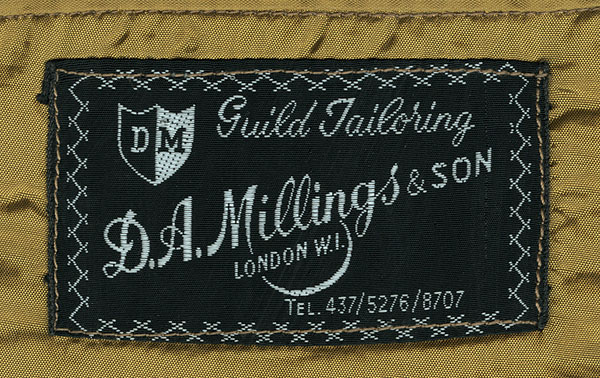
Arguably, the Beatles most iconic look from the early 1960s is their collarless suits. When the lads met London tailor, Douglas Millings in the Autumn of 1962 they requested “something different”. The design of this suit bares a striking resemblance to the collarless suits first designed by Pierre Cardin in 1960, however, the Beatles wearing the suits is what made the collarless jacket look quite popular in the early 1960s.

Pierre Cardin Suits, 1960
Millings became “the Beatles tailor” and the lads affectionately referred to him as “Dad”. He appeared alongside the group in the film, A Hard Day’s Night as a frustrated tailor trying to measure the Beatles. Douglas, along with his son Gordon were responsible for making hundreds of garments for the group over the years until the later half of the 60s.

The Beatles collarless suit edges were outlined in piping. The three-button suit jacket had slit pockets that were angled at the hips. The sleeves were shortened and buttonholes added to them. The back of the jackets had two small vertical vents that made it easier for the Beatles to perform in these suits. The look was quite mod and considered very fashion forward for a pop act.

John Lennon's Collarless Jacket
Another important component to the Beatles look was the famous mop top hair. Stuart Sutcliffe was the first Beatle to wear his hair stylishly combed forward. His girlfriend, Astrid Kirchherr had cut his hair into this unisex style. It was a popular look with many of the young men at the college she attended.

The Beatles poked fun at Sutcliffe’s newly styled hair and continued to wear theirs in 50s style greasy quiffs. A little later, George asked Astrid to cut his hair like Stuart’s, but after debuting his new look at a Hamburg club and being met with funny looks, Harrison quickly changed his hair back to the Teddy Boy look.

It wasn’t until the Autumn of 1961 when John and Paul ran into Jurgen Vollmer in Paris. He was an old friend from Hamburg and the “Exis” with the mod hair cut. They asked for what became known as the “Beatle cut”. 

The label inside John's Jacket
Returning from Paris with their new hairstyles, Epstein took them to a barber to have their mop-tops properly cut and styled. The sideboards were shortened and the fringe combed over the forehead, and they were clean shaven, perfecting what became perhaps the Beatles most iconic and well known image.


Thursday, 10 March 2016


If you're in the Netherlands this March and April, make sure you catch the UK's premier 60s Tribute band, The Overtures on tour!

The Overtures are kicking off 2016 with a 5 week tour of Holland at the end of March and throughout April, and we dare say they might be sporting some of their Madcap England clobber on stage too! The band were recently photographed wearing Madcap England shirts, jackets, suits and shoes for their new promo pics!

Check here for the full list of tour dates


Wednesday, 9 March 2016


The first delivery of the new Marmalade collection for Spring 2016 is due to arrive very soon at Atom Retro!

One of Atom Retro's best selling and longest stocked women's brands, Marmalade is a collection of premium women's 60s and Mod Dresses and jackets. Gorgeous 60s Mini Dresses taking influences and inspiration from some of the most iconic designers of the 1960s.

Here's a sneak preview of what's in store from Marmalade for this season. As always, the dresses can be quite limited stock, so don't let your favourite sell out before you've had chance to grab one!

STOP PRESS! The collection is now in stock! (More styles coming soon!) Shop here.

Check under the 'read more' for Marmalade's beautiful new dresses and jackets.


Sunday, 6 March 2016

Our new blog series by guest blogger, Harrison! This eight part series will explore The Beatles iconic looks from 1961 to 1970. You can also create your very own Beatles inspired look with this guide.

61’ - 62’
The Four Gene Vincents

611217_17.jpg
The Beatles in 1961. Photo by Albert Marrion
The earliest known footage of the Beatles performing in 1961. 
In this soundless 8MM clip, they are wearing their leather suits.

“...We went back to Germany and we had a bit more money the second time, so we bought leather pants and looked like four Gene Vincents, only a bit younger."

- John Lennon, ‘The Mersey Sound’

The Beatles emulated the style of Teddy Boys, a subculture of rebellious young men that had sprung up in the 1950s. They were product of American rock n’ roll music, and their style was a take on the dandies during the Edwardian period.

Teds wore knee length drape jackets, high necked collared shirts, skinny ties, drainpipe trousers and brogues or crepe soled creepers. They styled their hair with pomade and piled it high into a quiff.  

By the early 1960s the look had evolved. Young men were now wearing leather jackets - perhaps a call back to Marlon Brando in ‘The Wild One’ - and long pointed toe Winklepicker Shoes were in fashion. A pair of snugly fit drainpipe trousers were still popular.  

In the spring of 1961 The Beatles returned to Hamburg for a second time. They were contracted for a four month residency at the Top Ten Club and were reunited with their old friend, Astrid Kirchherr, a photographer they’d met during their first trip to Germany. The young woman was also the girlfriend of Stuart Sutcliffe, the group’s bass player at the time.

When he wasn’t performing with the band, Stuart would spend his time with Astrid. He was greatly influenced by her unusual sense of style. She was part of the existentialist movement, shortened to 'Exis' by John Lennon. They dressed in all-black, unisex clothing and wore unisex hairstyles. Stuart would borrow her clothes and mirror her look. In particular, he was taken with her tight black leather suit, and Astrid had one tailor-made for Stuart to wear when he performed with the group.  

His bandmates were knocked out by the leather suit wanted their own to match, but they couldn’t afford the expensive prices the leather shop downtown charged. They went to a affordable tailor in the St. Pauli district of Hamburg and ordered black leather drainpipe pants and matching velvet shirts. They accessorised their hard edged look with cowboy boots and occasionally wore pink caps that sat on the back of their quiffs.  

The Beatles return to Liverpool caused a stir of excitement. Their new look and sound set them apart from other groups and gave them the edge on the Merseyside music scene. Pretty soon others on the Merseybeat scene were also emulating the Beatles 'Hamburg' style.


Tuesday, 1 March 2016

Here's some brand new promo pics of the UK's top Sixties Tribute band, The Overtures for 2016, straight off the presses!

Here's the band as a four piece, Den Pugsley, Steve Phypers, Jamie Cook and Chris Skornia, wearing Madcap England Blue Pinstripe Suits.

The Overtures boast over 400 songs in their repertoire, covering every aspect of 60s music from Merseybeat classics from The Beatles and The Searchers, to Surf rock sounds of The Beach Boys, folk rock from The Mamas and The Papas and Donovan, through to R&B blues from The Rolling Stones, Mod rock from The Who and carrying on to the psychedelic power of Jimi Hendrix. They guarantee there will be something for everyone in their comprehensive Bootleg Sixties theatre show!

Look out for new tour dates from The Overtures soon!

Check under the cut for more fab pics of The Overtures in Madcap England.

Thursday, 17 April 2014


Get a sneak peak at Marmalade's spring/summer 2014 coming soon to Atom Retro!


Marmalade is definitely one of the front runners for the best sixties and mod dresses, the latest pieces are certainly not ones to disappoint! The new collection brings a fresh look on different shapes and styles of dress but keeps it's ever unique,vogue feel about it.The use of clean whites contrasting with vivid pop art colours definitely comes across as a strong theme for the collection, as well as simple cute touches which makes them perfect for many occasions day or night this spring and summer!  


Firstly, a very sixties inspired A-line dress, a classic from Marmalade however with a different take for the spring/summer collection with the use of colour. Bright white being the main colour with mint green contrasting it on the top of the dress, complimented by a V neckline, and across the bottom too. The dress also uses a vintage style zip pocket which makes it ooze in cuteness.Perfect for any kind of occasion this Spring/Summer!

Saturday, 29 March 2014

photo credit: Paul Easton via photopin cc
"For The Who, Radio Caroline was an angelic force… without Caroline we would not have sold a single record."
- Pete Townshend

It was 50 years yesterday that Radio Caroline first began to broadcast, from a ship in international waters. Launching at midday on Easter Sunday - the 28th March 1964, Radio Caroline would revolutionise British radio.
The first track played was The Rolling Stones' Not Fade Away.

Set up by Ronan O'Rahilly, Radio Caroline managed to circumvent record companies' control of popular music broadcasting in the United Kingdom. O'Rahilly had failed to obtain airplay on Radio Luxembourg for his client, Georgie Fame's records. Radio Luxembourg's airtime was committed to sponsored programmes promoting the major record labels; EMI, Decca, Pye and Philips. The only other radio station available at the time was the BBC's light programme - considered dated and frumpy, and not particularly interested in broadcasting pop music. Radio Caroline changed that - instantly popular, it provided exposure and airtime for bands like The Who, The Move, Led Zeppelin, Cream and more.

Radio Caroline broadcast from 5 different ships from 1964 - 1990 and then via satellite from 1998 to 2013. Radio Caroline currently broadcasts 24 hours a day via the Internet, playing music from the 1960s right up to today.

Sunday, 16 March 2014


Some good light reading comes in the form go GQ’s new Collectors Edition magazines: Bailey’s Heroes.

The March 2014 issue sees Bailey reflect on time spent with John Lennon. He discusses the sense of tension between John and Paul during a legendary Bailey photo shoot, his lukewarm feelings to early Beatles music and seeing John at London’s fashionable Ad Lib Club.

"I didn't like the Beatles - I liked John. The Beatles were a boy band. I thought they were square as houses…"

Also featured in the issue, Yoko Ono tells a very unique apple story and it’s nothing to do with their famed Apple Corps…

"One of my strongest memories of John was the first time he made me laugh. He just grabbed an apple that was in my exhibition [in 1966, at London's Indica Gallery, Ono showed her avant-garde work which contained an apple on sale for £200] took a bite out of it and just looked at me. I was very, very upset because it was my work. I thought, How dare he, what a rude person! And I just looked at him and he could see that I didn't like it and he registered this and did a shy little smile and put it back on the pedestal”

You can just about picture the scene!

So, if you fancy a good read, check out Bailey’s Heroes in the March 2014 edition of GQ magazine.