Showing posts with label Madcap England. Show all posts

Saturday, 29 April 2017

Part One: Let's Keep It Classic

What makes a mod suit mod?  One may argue that the mod suit is what defines the mod look, more so than parkas, gingham shirts and pique polos - after all, we're only wearing our parkas to keep the grease and oil from our scooters from staining our impeccable, smart and sharp mod suit.

The mod suit look emerged in the late 50s. The first mods - the modernists - defined as such for their love of modern jazz over traditional jazz (the mods vs. the trads) looked to their jazz heroes for style inspiration. Charlie Parker, Miles Davis, John Coltrane, et al, were often pictured wearing sharply tailored suits. Couple this with the influence of Italian fashion and the mod suit was born.

So lets examine our classic mod suit;  the basics and the necessities. The elements which define a mod suit.


  1. Slim fit & Waisted Cut: The mod suit is a slim fit. As slim as you can stand it. The look does not allow for boxy jackets or baggy trousers. Your suit must be cut slim with darts to accentuate the waist. 
  2. Single Breasted: The classic mod suit is a single breast. This means one row of buttons, not two (which is double breasted). 
  3. 3 Button Fasten: Tradition dictates the jacket is high fastening with a three button fasten. However, we will usually wear it with only the top two fastened. 
  4. Narrow, notch lapels: Slim lapels are a must, typically with a notch (over a peak). This is the triangular cut out shape to the top of the lapel. Exact width is a matter of taste, but around a two inch width will see you through nicely. 
  5. Short length: This blazer isn't called the bumfreezer for nothing. Mod suit jackets are slightly on the short side. Nothing worse than a suit jacket which is too long. 
  6. Short-ish sleeve: The sleeve should also be on the slightly short side, although not so it is overly noticeable. This is so we can show off our shirt sleeve cuffs and our fancy cufflinks. 
  7. Ticket pocket: Another defining aspect of the mod suit. The ticket pocket is the smaller, third pocket usually found above the main pocket on the right hip of the suit jacket. A British tailoring tradition, we could write a completely separate article on the history of the ticket pocket, but for our purposes here, it adds that dandy mod heritage look. 
  8. Mohair and/or Tonic fabric:  Not all mohair fabrics are tonics and not all tonic look fabrics are mohair, but if we can have both, then why not? Mohair is the classic fabric used in a mod suit. Mods loved the lustrous, smooth look mohair wool gives a suit, making it immediately the mark of class and style. Tonik - the original and proper fabric - was developed by French fabric manufacturer Dormeuil, but the tonic look here refers to a two-tone, iridescent fabric which copied that look. (The original fabric was quite expensive, but the look can be achieved with other tonic fabrics). 

  9. Side vents: On the back of our mod suit jacket we find two side vents. This has also been written into mod lore that our classic mod suit shall feature side vents (twin slits at either side of the back of the jacket) and never a centre vent (a single slit in the middle of the back of the jacket at the bottom). The length of the vent is a matter of personal taste. The Who song (or High Numbers, as they were then) Zoot Suit contains the lyric, "I wear zoot suit jacket with side vents five inches long," so a lot of mods opt for that length, but anything in that region is fine. The vents purpose is to aid movement while wearing the suit. For a frame of reference, the vents on the suit jacket in the illustration are 7.25". 
  10. Tapered, slim leg Trousers: On to the trousers and as you might expect, the mod suit trousers are slim leg and usually tapered, meaning the are narrower at the bottom than the top, as opposed to straight. 
  11. Short-ish leg length: As with our jacket sleeves, we wear the trousers very slightly on the short side (but no half-masts, please!) This is so we can show off our stylish loafers, brogues or chelsea boots and maybe the snazzy socks we're wearing with them. Mod is all about detail and we need to show off that detail. 
  12. Narrow Ankle: The tapered mod suit trouser leg results in the narrow ankle. A traditional suit would have maybe 16" - 18" bottoms or wider, but the mod suit will have a narrow bottom. Again, it's personal preference as to how wide. 14" is a good ball park figure. 
  13. Pockets: Trouser pockets are a must, but how many and how they look is again down to taste. The mod suit pictured here has two front slanted side pockets which keep the shape and silhouette of the trouser nicely. Not pictured is also a single straight pocket with a button fasten on the back, but more about pockets in part two. 
  14. Narrow waistband: Also details down to preference and style, but the classic mod suit will feature a narrow waistband, equipped to hold a narrow width suit belt (but probably unsuitable for wider jeans belts). You shouldn't really have to wear a belt with your mod suit, but sometimes it's nice. 


This, I should stress, is only the basics of a mod suit - a starting point. Here are the rules of mod suit style, and now we have learned the rules, we can break them! Look out for part two coming soon...

The suit featured in this article is the Madcap England Mod Suit in Burgundy Mohair tonic. Find it here.

Thursday, 12 January 2017


Madcap England's latest design the retro Jackie and Robin PVC raincoats have arrived. These unique garments are inspired by the iconic Mary Quant Rainsmock design of the 1960's.


In 1963 the British designer Mary Quant wowed the fashion world when she previewed her Wet Collection in Paris. The collection of experimental designs using PVC, that had been two years in production, made history. Part of the collection was the original PVC Rainsmock which featured her new Christopher Robin collar design.


The appearance of the exciting new style could not have occurred at a better time. The use of bold block colours meant the garment fitted perfectly with the already established Pop-Art movement. Celebrities such as Cynthia Lennon, Jean Shrimpton and Twiggy were pictured wearing the Rainsmock cementing it's style into the public's consciousness, while Jackie Bowyer wore the item in her most famous photoshoot of the decade. The Rainsmock quickly became a much loved and iconic part of the Swinging Sixties.


Madcap England are giving you the opportunity to have your own piece of this incredible fashion and cultural heritage with the Jackie and Robin raincoats. The PVC garments stay true to the original by using bold block colours, a Christopher Robins collar and colour contrast button design.

Find the collection here.

Sunday, 24 April 2016

Part five exploring The Beatles style from 1961 to 1970, compiled and written by guest blogger, Harrison. In this instalment the Beatles embrace colour and patterns. You can also create your very own Beatles inspired look with this guide.

'65 - '66
Here Comes the Colour 

The Beatles, 1966
The Beatles Live at Budokan 
1966


"The Beatles saved the world from boredom."
- George Harrison 

In the winter of 1965, The Beatles released Rubber Soul, their sixth studio album. The LP was met with both commercial and critical success. It also marked a departure for the lads from their poppy sound and clean cut image. The cover was shot by photographer, Robert Freeman in the backyard of John Lennon's home, Kenwood. 

Freeman was a favorite photographer of the Beatles and consecutively designed five album covers for the group from 1963 to 1966. 

The Beatles stretched image tilted at a 'dutch angle' was happenstance. Freeman was projecting photographs of the band onto an album sized piece of cardboard. It fell slightly and stretched the photograph. The group liked the distorted effect and requested Freeman duplicate that for their album cover. 

Freeman asked illustrator Charles Front to design the lettering. Front was inspired by the title and wanted to invoke an image of a thick substance being pulled downwards. This stylized font became synonymous with the 1960s and mirrored Freeman's elongated album cover image of the Beatles. 


Wednesday, 13 April 2016


Premier UK Who Tribute band, Who's Next played at the legendary Cavern Club, Liverpool recently for a sold out show in the Cavern's Live Lounge.

The show was a special set from Who's Next. The first half was made up of early Who songs and R'n'B tracks the Who covered when they were first starting out, including some quite rare, and even more rarely played live songs. The second half of the show was the Who's huge hits and rock anthems.

The band wore a lot of Madcap England styles for the Cavern Club show, including guitarist Dante DiCarlo in a Madcap England Racing Jumper and Madcap England 'Casbah' Beatle Boots (because what else would you wear on your feet down at The Cavern?!) and also singer, Gary Charman in a Madcap England Pinstripe Marriott Polo.

Dante, writing on the Who's Next blog said about the show, "The gig was an absolute blast and afterwards we were informed we had sold the place out and it had been packed to capacity! We were all beyond chuffed and can’t wait to play there again!"

Check below for some fab pics from the gig.

And then check Who's Next's website for a gig near you - the band is playing all over the UK this year!

All images © Ian Hanson Photography. (Thanks guys!)

Friday, 18 March 2016

This interview was originally printed in Up&Atom magazine, Issue 3 (Summer 2013). 

I can’t quite believe it’s been ten years since we first picked up Nic Armstrong’s debut album, The Greatest White Liar. In fact, you have to go back nearly eleven years to the beginning of the story. The date was Saturday 11th October 2003, the venue, The Cockpit in Leeds. Nic was on the bill with Crispian Mill’s The Jeevas that night and it was his live show that really blew us away.

Ever since that day we have tried our best to keep in tune with the latest Nic Armstrong news and releases. Nic Armstrong - sometimes also known as Nic Armstrong & The Thieves, and less occasionally as The IV Thieves, hails from Newcastle-Upon-Tyne, England. He counts Miles Kane, Noel Gallagher and Paul Weller amongst his fans (and has toured supporting the latter two at various times). Now based in Austin, Texas, Nic’s latest record, the excellent Pocketless Shirt EP is out now and he’s is currently working on a follow up EP and an album. He’s a busy man!

Up&Atom caught up with Nic, who kindly took time out of his hectic schedule to chat with us

Up&Atom - How old were you when you first picked up a guitar? What made you want to play?

Nic Armstrong - I was a young lad, picked up the guitar to beat agoraphobia or some massive form of anxiety in public.

U&A - The Greatest White Liar is a brilliant album. We’ve listened to it so many times that we could write a thesis on it, but that’s not the same as hearing the story from the man himself. Tell us about the album and recording it. Oh, and just who is that lying son of a gun you refer to in the title?

NA - Thank you. Still so grateful for the opportunity to make The Greatest White Liar. We really had a great time making it. We didn’t really do any pre-production.

I remember it was a hot summer in London. We had two weeks to record. Liam [Watson, record producer who has also worked with The White Stripes and The Zutons] would come round in the morning and pick us up. We would start early, record, have great lunches, resume, then wrap up around eight. We would then go out and get absolutely ragged on drink around East London. There’s a memory of dining this 16ft cardboard tube in the street and mounting some mannequin’s head or clown mask on it. In the studio it was all business and a million cups of tea.


One Little Indian [Nic’s record label] asked how I wanted to record. I told them I’d play all the parts except for the drums. I’d spotted a fantastic drummer - Jonny Aitken - in Nottingham a couple of weeks earlier and he was onboard to play. The night before we were due in Toe Rag Studios, my best mate Sam picked us up in his car. We loaded up all this really shitty, wrecked equipment - knackered guitars, half a sitar, broken percussion, my sister’s plastic keyboard and headed to London. All these things were used in the studio - for example, the answering ‘na-na na-na’ on She Changes Like The Weather is that funny keyboard.

Ah, the lying son of a gun, eh? Never handled a gun in the UK, honest guv...! Texas is a different kettle of fish. We’ve shot AK47’s, rifles, pistols, uzis..!

Tuesday, 15 March 2016


Here are a couple of new pics of Dante DiCarlo, the very talented guitarist with premier UK Who tribute band, Who's Next.

Dante is sponsored by Madcap England and here in these photos he's wearing Madcap England's Attack Racing Jumper.

Dante can often be spotted on stage in the Madcap Townshend Union Jack blazer too!

Who's Next are currently touring! Catch them at a gig near you. Check their website for info.

See under the 'read more' for more pics of Dante in action.


Sunday, 13 March 2016


Part two of our eight part series exploring The Beatle’s style from 1961 to 1970, by our guest blogger, Harrison. In this instalment we see the Beatles out of leather and into their first suits. You can also create your very own Beatles inspired look with this guide.
'62 - '63
Suited and Booted

01.jpg
The Beatles wearing their Beno Dorn Suits. Photo by Harry Whatmough, 1962


The Beatles first recorded performance with Ringo Starr on drums, 
wearing their suits without the blazers.


“I don’t think John particularly liked wearing a suit - nor did I - but we wanted more work, and we realised that’s what we had to do.” 
- George Harrison


In January of 1962, The Beatles signed a contract with Brian Epstein to manage them. Epstein was only a few years older than the lads and had no prior experience managing a band, although he had successfully run NEMS, his family’s record shop on Whitechapel, Liverpool. What he lacked in experience he made up for in his determination to ensure the groups music career flourished.

One of the first moves Epstein made was to encouraged the Beatles to clean up their image. He coaxed them into wearing jeans and jumpers with their leather jackets instead of their full leather suits. This was a compromise the lads were willing to make, however, when Epstein then suggested that they wear tailored suits on stage, he was met with resistance, especially from John Lennon and Pete Best. Both young men preferred to wear their leathers, thinking it was a more 'rock and roll' image, but they also acknowledged that if they wanted to advance their careers, they needed to change their appearance.

The Beatles moved into the next phase of their careers, transitioning from rough-around-the-edges rock 'n' rollers to polished pop stars. They performed in the leather suits for the final time at the Cavern Club in the Spring of 1962.

In 2012, George Harrison’s leather jacket went up for sale at Bonham’s. Harrison bought the jacket in 1960 for £10 ($14) and it fetched £110,450 ($177,400) at auction. His Chelsea 'Beatle' boots, which were also part of the memorabilia sale went for £61,250 ($98,000). A pair of leather trousers that allegedly belonged to Paul McCartney also surfaced in 2013.

Mike Hoggard often performed at the same venues as The Beatles in the early 60s and he claims to be in possession of McCartney’s leather trousers. He states that Brian Epstein gifted the clothing item to him after a gig at the Cavern Club. Hoggard’s claim hasn’t been substantiated and the trousers with the name ‘Paul’ written inside remain in his possession.

To further smartened up the band’s look, Epstein took the lads to a local tailor, Beno Dorn where they were fitted for their first mohair stage suits. The blazers were three-button, single breasted with slim lapels, broad shouldered and narrow at the waist. The matching suit trousers were similar to the drainpipe trousers the Beatles wore and at their insistence, were cut to fit snugly through the legs and were tapered quite narrow at the ankle. The lads returned the trousers twice to the tailors to have them narrowed further! Essentially, this was a slim lapelled, 3 button Mod Suit with a slight 1950s hangover in the short, more boxy fit of the jacket.

However, even away from the band, not everyone was pleased with the Beatles new look. For some of the fans it signalled the bands start to move away from Liverpool, and Cavern Club DJ, Bob Wooler remarked that the mohair suits were impractical. "They went on stage and really sweated and all their suits began to rot, they began to come apart at the seams... But that was the start of the new image. They learned how to adjust."

The dress shirts worn with the suits had rounded penny collars and were pin spread (bar collars) finished with inch wide skinny ties. The Portofino french cuffs of the dress shirt peeked out from their blazer sleeves and were accented with cuff-links.

4507-180dpi.jpg
The Beatles wearing their Douglas Millings collarless suits. Photo by Dezo Hoffman, 1963
The Beatles performing in 1963.


Arguably, the Beatles most iconic look from the early 1960s is their collarless suits. When the lads met London tailor, Douglas Millings in the Autumn of 1962 they requested “something different”. The design of this suit bares a striking resemblance to the collarless suits first designed by Pierre Cardin in 1960, however, the Beatles wearing the suits is what made the collarless jacket look quite popular in the early 1960s.

Pierre Cardin Suits, 1960
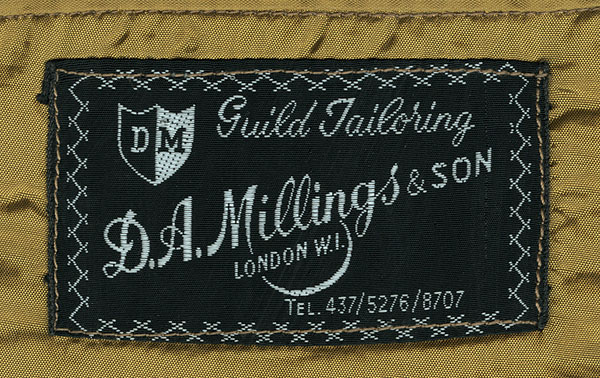
Millings became “the Beatles tailor” and the lads affectionately referred to him as “Dad”. He appeared alongside the group in the film, A Hard Day’s Night as a frustrated tailor trying to measure the Beatles. Douglas, along with his son Gordon were responsible for making hundreds of garments for the group over the years until the later half of the 60s.

The Beatles collarless suit edges were outlined in piping. The three-button suit jacket had slit pockets that were angled at the hips. The sleeves were shortened and buttonholes added to them. The back of the jackets had two small vertical vents that made it easier for the Beatles to perform in these suits. The look was quite mod and considered very fashion forward for a pop act.

John Lennon's Collarless Jacket
Another important component to the Beatles look was the famous mop top hair. Stuart Sutcliffe was the first Beatle to wear his hair stylishly combed forward. His girlfriend, Astrid Kirchherr had cut his hair into this unisex style. It was a popular look with many of the young men at the college she attended.

The Beatles poked fun at Sutcliffe’s newly styled hair and continued to wear theirs in 50s style greasy quiffs. A little later, George asked Astrid to cut his hair like Stuart’s, but after debuting his new look at a Hamburg club and being met with funny looks, Harrison quickly changed his hair back to the Teddy Boy look.

It wasn’t until the Autumn of 1961 when John and Paul ran into Jurgen Vollmer in Paris. He was an old friend from Hamburg and the “Exis” with the mod hair cut. They asked for what became known as the “Beatle cut”. 

The label inside John's Jacket
Returning from Paris with their new hairstyles, Epstein took them to a barber to have their mop-tops properly cut and styled. The sideboards were shortened and the fringe combed over the forehead, and they were clean shaven, perfecting what became perhaps the Beatles most iconic and well known image.


Thursday, 10 March 2016


If you're in the Netherlands this March and April, make sure you catch the UK's premier 60s Tribute band, The Overtures on tour!

The Overtures are kicking off 2016 with a 5 week tour of Holland at the end of March and throughout April, and we dare say they might be sporting some of their Madcap England clobber on stage too! The band were recently photographed wearing Madcap England shirts, jackets, suits and shoes for their new promo pics!

Check here for the full list of tour dates


Sunday, 6 March 2016

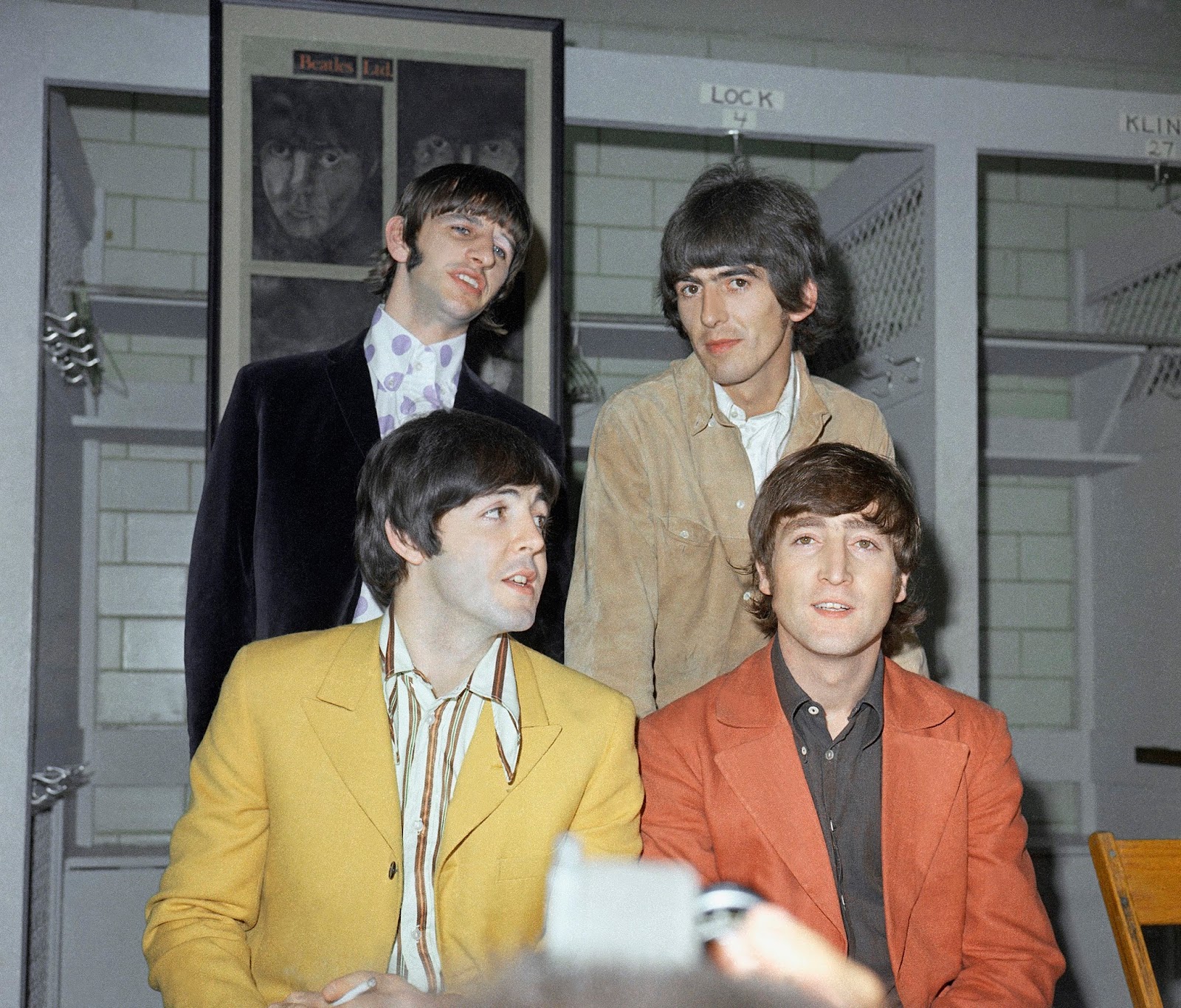
Our new blog series by guest blogger, Harrison! This eight part series will explore The Beatles iconic looks from 1961 to 1970. You can also create your very own Beatles inspired look with this guide.

61’ - 62’
The Four Gene Vincents

611217_17.jpg
The Beatles in 1961. Photo by Albert Marrion
The earliest known footage of the Beatles performing in 1961. 
In this soundless 8MM clip, they are wearing their leather suits.

“...We went back to Germany and we had a bit more money the second time, so we bought leather pants and looked like four Gene Vincents, only a bit younger."

- John Lennon, ‘The Mersey Sound’

The Beatles emulated the style of Teddy Boys, a subculture of rebellious young men that had sprung up in the 1950s. They were product of American rock n’ roll music, and their style was a take on the dandies during the Edwardian period.

Teds wore knee length drape jackets, high necked collared shirts, skinny ties, drainpipe trousers and brogues or crepe soled creepers. They styled their hair with pomade and piled it high into a quiff.  

By the early 1960s the look had evolved. Young men were now wearing leather jackets - perhaps a call back to Marlon Brando in ‘The Wild One’ - and long pointed toe Winklepicker Shoes were in fashion. A pair of snugly fit drainpipe trousers were still popular.  

In the spring of 1961 The Beatles returned to Hamburg for a second time. They were contracted for a four month residency at the Top Ten Club and were reunited with their old friend, Astrid Kirchherr, a photographer they’d met during their first trip to Germany. The young woman was also the girlfriend of Stuart Sutcliffe, the group’s bass player at the time.

When he wasn’t performing with the band, Stuart would spend his time with Astrid. He was greatly influenced by her unusual sense of style. She was part of the existentialist movement, shortened to 'Exis' by John Lennon. They dressed in all-black, unisex clothing and wore unisex hairstyles. Stuart would borrow her clothes and mirror her look. In particular, he was taken with her tight black leather suit, and Astrid had one tailor-made for Stuart to wear when he performed with the group.  

His bandmates were knocked out by the leather suit wanted their own to match, but they couldn’t afford the expensive prices the leather shop downtown charged. They went to a affordable tailor in the St. Pauli district of Hamburg and ordered black leather drainpipe pants and matching velvet shirts. They accessorised their hard edged look with cowboy boots and occasionally wore pink caps that sat on the back of their quiffs.  

The Beatles return to Liverpool caused a stir of excitement. Their new look and sound set them apart from other groups and gave them the edge on the Merseyside music scene. Pretty soon others on the Merseybeat scene were also emulating the Beatles 'Hamburg' style.


Tuesday, 1 March 2016

Here's some brand new promo pics of the UK's top Sixties Tribute band, The Overtures for 2016, straight off the presses!

Here's the band as a four piece, Den Pugsley, Steve Phypers, Jamie Cook and Chris Skornia, wearing Madcap England Blue Pinstripe Suits.

The Overtures boast over 400 songs in their repertoire, covering every aspect of 60s music from Merseybeat classics from The Beatles and The Searchers, to Surf rock sounds of The Beach Boys, folk rock from The Mamas and The Papas and Donovan, through to R&B blues from The Rolling Stones, Mod rock from The Who and carrying on to the psychedelic power of Jimi Hendrix. They guarantee there will be something for everyone in their comprehensive Bootleg Sixties theatre show!

Look out for new tour dates from The Overtures soon!

Check under the cut for more fab pics of The Overtures in Madcap England.

Sunday, 25 October 2015


Listen to and claim a free download of the title track of the new Nic Armstrong and The Thieves new EP, Negative Slant. Head to www.nicarmstrongmusic.com for a listen and click the 'buy' link to download it for absolutely free! Don't forget to support real music and pre-order your copy of the Negative Slant EP while you're there!

Eagle-eyed readers will notice this cover pic also features the Madcap England Trip Op Art Shirt!


Sunday, 27 October 2013

New Arrivals from Madcap England

The AW13 Madcap England range revels in the loveable rogue look of Sixties Mod culture with icons such as Brian Jones, Steve Marriott, Keith Moon, George Best and Michael Caine providing inspiration.

Casual Mod knitwear and polos, Retro sports themes and Vintage tailoring  are all featured, enticingly capturing the essence of Swinging Sixties Britain.

Refreshing colour palettes serve to add a hint of contemporary Indie charm, whilst fun prints and intarsia knits create a fun and quirky injection within the range.

For the first time, the Madcap England range is enhanced by the introduction of essential head wear - The Beatle Corduroy Hat in two fab colours and has been well received.

The full AW13 Collection can be seen here: Madcap England AW13

Here's a few highlights from the impressive AW13 range:


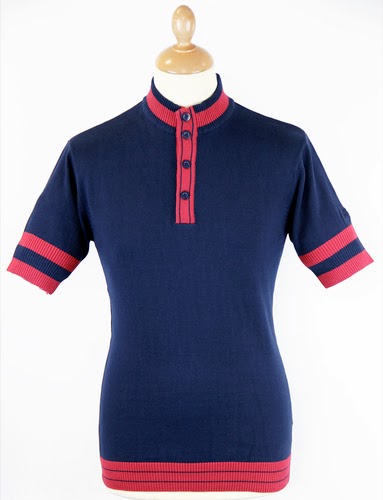
 1: Geared Cycling Top                               2: Donovan Polo (Navy)