Showing posts with label 60s. Show all posts

Monday, 3 October 2016


Marmalade Dresses new collection for Winter 2016 is due to arrive in a few weeks, so we thought you might enjoy a little preview of what's in store.

As always, Marmalade create premium quality dresses and coats in 60s Mod inspired designs. Op-Art, pop art, mod and 60s geometric design is the order of the day for this seasons collection, plus a couple of retro print fabric highlights.

Check below for pics to drool over or shop for Marmalade here.

Monday, 8 August 2016

Lulu Dress


Mademoiselle Yéyé's collection for Autumn and Winter 2016 has just arrived at Atom Retro (with a little more to come later) and it doesn't disappoint!

As fans of Mademoiselle Yéyé have come to expect, this seasons collection comprises unique, high quality dresses, tops, knits and more, all with 60s Mod style and vintage va-va-voom!

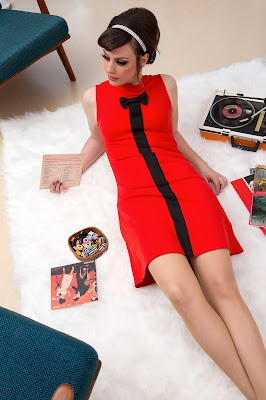
The Lulu Dress (pictured left) is a new style to the collection this season. This supremely sixties inspired mod mini dress comes in red with fixed black bow detail to centre front. In a super stretchy, comfy to wear fabric, this is a must-have dress.

Check below for more of what's in store from Mademoiselle Yeye, or shop now!


Tuesday, 21 June 2016


"...They brought light, minimalist design that easily turned any outfit into a designer brand."
- The Caravan, Ray-Ban Icons

Ray-Ban Caravan Sunglasses arrived on the scene in 1957, twenty years after Ray-Ban designed and patented the world's first Aviator Sunglasses. A new take on the Aviator, the Caravan featured a square lens to replace the iconic large teardrop shaped lens of the classic Aviator, a brow bar and a streamlined, geometric design. 

The Aviator had originally been designed with pilots in mind (giving rise to the name) who required a pair of large lens sunglasses to block out glare from the sun while flying. The style to launch Ray-Ban, (the name itself literally derived from the "banning of the sun's rays") the Aviator with it's oversized, protective lens and lightweight metal frame had gained popularity in mainstream fashion following the second world war. US army General Douglas McArthur had been photographed wearing Ray-Ban Aviator Sunglasses as he strode ashore in the Philippines in 1944 and the military inspired look had taken off. 

Robert DeNiro wearing Ray-Ban Caravan Sunglasses in
Taxi Driver, 1976
By the end of the fifties, Ray-Ban were ready to develop a new Aviator design. There was a demand for a smaller version of the classic Aviator, and the fashion was moving towards geometric influences. Also, as the Wayfarer had proven popular in the 1950s, Ray-Ban was also looking for a way to rejuvenate the Aviator design, and so the Caravan was born. 

Available in all the classic Ray-Ban colour ways - the G-15 or B-15 lens with the gold, silver or gunmetal frame, the Caravan's sharp, minimalist design also offered the gradient and mirror lens. The smaller lens still offered a good amount of protection for the wearer from glare and a certain amount of anonymity desired by politicians and celebrities. 

Barry Gibb in Caravan Sunglasses
During the Aviator revival of the 1970s, the Caravan style also gained ground as an alternative Aviator option. It was prominently featured in Martin Scorsese's 1976 film, Taxi Driver, being worn by Robert DeNiro as he played Travis Bickle.  

The Aviator style was adopted as the sunglasses of choice for the disco scene in the seventies as well, so too the Caravan provided an alternative look. Here is Barry Gibb wearing a pair of Caravan sunglasses in the seventies. 

Skier Jean-Claude Killy looking cool in Caravans in the 70s


Following the demise of disco in the 1980s, the Aviator's popularity waned, and this had a knock on effect for it's younger Caravan brother. To combat this, Ray-Ban secured a very lucrative deal in 1982 for product placement in movies and TV shows for the following five years. With Tom Cruise and other movie stars wearing Aviator style sunglasses in many high profile films, the Aviator was soon back in fashion. 

Jon Hamm as Don Draper in Mad Men.


In recent years, the Ray-Ban Caravan has proven a popular style among mods who are attracted by the Caravan's streamlined, classic and clean shape and style. The Caravan was also chosen as the style for Jon Hamm to wear as Don Draper in Mad Men, invoking a late fifties and early sixties classic American Retro look. 


Thursday, 16 June 2016

Part two of our Mod hairstyles guide explores the 1960s - the birth of the Mod look. Along with Mod clothing, Mod hairstyles are part of intrinsically part of mod style and image. How you chose to wear your hair contributes to your over all identity, and none more so than within a culture like Mod or any of it's subcultures Mod Revivalists, Scooterboys, Skins and more. The Sixties saw a lot of social and political change and this was reflected in fashion and style. The new generation wanted to break away and create its own identity. Mod was born!


Steve Marriott with his classic layered look
1960s: The Steve Marriott Layered Cut

Similar to: The Mop Top

Maybe the first proper mod hairstyle, the Steve Marriott take on the classic mens layered cut landed somewhere in between a long haired lover from Liverpool Mop Top and the shorter, neat Ivy League look of the past. The hair is cut in layers, resulting in a choppy, different length look which is typically longer at the front, sides and fringe and cut shorter at the back. At the side, the hair might be cut around the ear, or worn slightly over it. There is a soft centre parting which reaches the front where the fringe is worn swept to the sides.

Although not as famous as other 1960s hair cuts, this mod hairstyle is as iconic and popular among mods today as it ever was.


The Beatles with their classic Mop Top look

1960s: The Mop Top

Similar to: The Pageboy

The Mop Top, or Beatle Cut, (or 'Arthur', according to George Harrison!) is probably the most famous haircut of the 1960s. Named because of it's resemblance to a literal mop, the haircut originated from the Beatles Hamburg days. Astrid Kirchherr, a photographer and the girlfriend of original Beatles bassist, Stuart Sutcliffe is credited with the style which was worn first by her, her friends and Stuart. Later all the other Beatles (except for a reluctant Pete Best!) adopted the look giving the band it's first cohesive and truly unique look. The hair is cut long, down to the collar and covering the ears with a long fringe at the front and no parting. Although ridiculed by adults at the time, the mop tops was vastly popular in the sixties. In the Britpop nineties there was a revival to this intrinsically sixties mod hairstyle.

Steve Marriott with a shorter, jagged cut 


1960s: The Other Steve Marriott Cut

Similar to: The French Crop

Like a sixties update to a classic French Crop haircut, this is the shortest style in our sixties mod selection. Still cut with choppy layers and in different lengths, this is a much shorter, low maintenance version of the Steve Marriott layered cut. It can be cut around the ears, or overlapping them as the wearer desired and features a blunt, choppy, short fringe at the front with a little bit of feathering.

Neat, sharp and with lots of attitude, this is a mod haircut which harks back the short back and sides of yesteryear, with a modern update. 


The Yardbirds Keith Relf with a long Pageboy cut
1960s: The Pageboy 

Similar to: The Mop Top, The Bowl Cut

A unisex haircut which suits both men and women mods. The cut first became popular in the 1920s with young boys after it was worn by child star, Jackie Coogan (who grew up to be Uncle Fester in the original Addams Family TV series!) It was named after what was perceived to be a 'pudding basin' haircut wore by medieval pageboys. The cut is worn straight and long, past the ears, where it then curls inwards and usually with a long fringe at the front.

Popular in both the fifties and sixties, it's perhaps the 1960s when it was the most prominent as an alternative to the mop top and a style which still fit with the non-conformist, long haired looks of the decade.


Further Reading: 

Wednesday, 15 June 2016

(This article was originally published on Atom Retro's Mod Clothing Chronicles).

A life leading up to Bazaar:

Born in Blackheath, London to Welsh Parents, Mary Quant finished her studies at Blackheath High School and went on to study illustration at Goldsmith's College. Upon finishing her course, Quant took up a post as an apprentice couture milliner, whilst also taking a pattern cutting class in her spare time. It was her experiences during her apprenticeship that led Quant to realise that fashion shouldn't just be reserved for the upper classes, but should also be accessible to a younger, less privileged clientele.

Quant surmised that at the time fashion simply wasn't tailored to the youth market. Inspired by memories from childhood, images of Chelsea Beatniks and flamboyant dance outfits, Quant was to assume the mantle as a pioneer of youth fashion. Teaming up with her husband and business partner, Alexander Plunkett-Greene whom she had had met whilst studying at Goldsmith's College and Archie McNair to take on accountancy, legal and commercial aspects, Quant plotted a fashion revolution that would begin at 138A Kings Road, London.